Director: Charlie Kaufman
Screenplay by: Charlie Kaufman
Starring: Philip Seymour Hoffman, Samantha Morton, Michelle Williams, Catherine Keener, Emily Watson, Diane Wiest and Jennifer Jason Leigh
Rating: ★★★½
After writing very well received screenplays for over a decade Charlie Kaufman turned to directing in 2008 with his film Synecdoche, New York; a tale of art, life and death. At the time it received polarising reactions, being hailed as either a masterpiece or a self-indulgent mess (and sometimes both at the same time). It deals with the usual themes that Kaufman deals with, alienation, mid-life, artistic struggles and death. In many ways it is the ultimate Kaufman film, it feels like everything he’s made before and somehow even after is building to this.
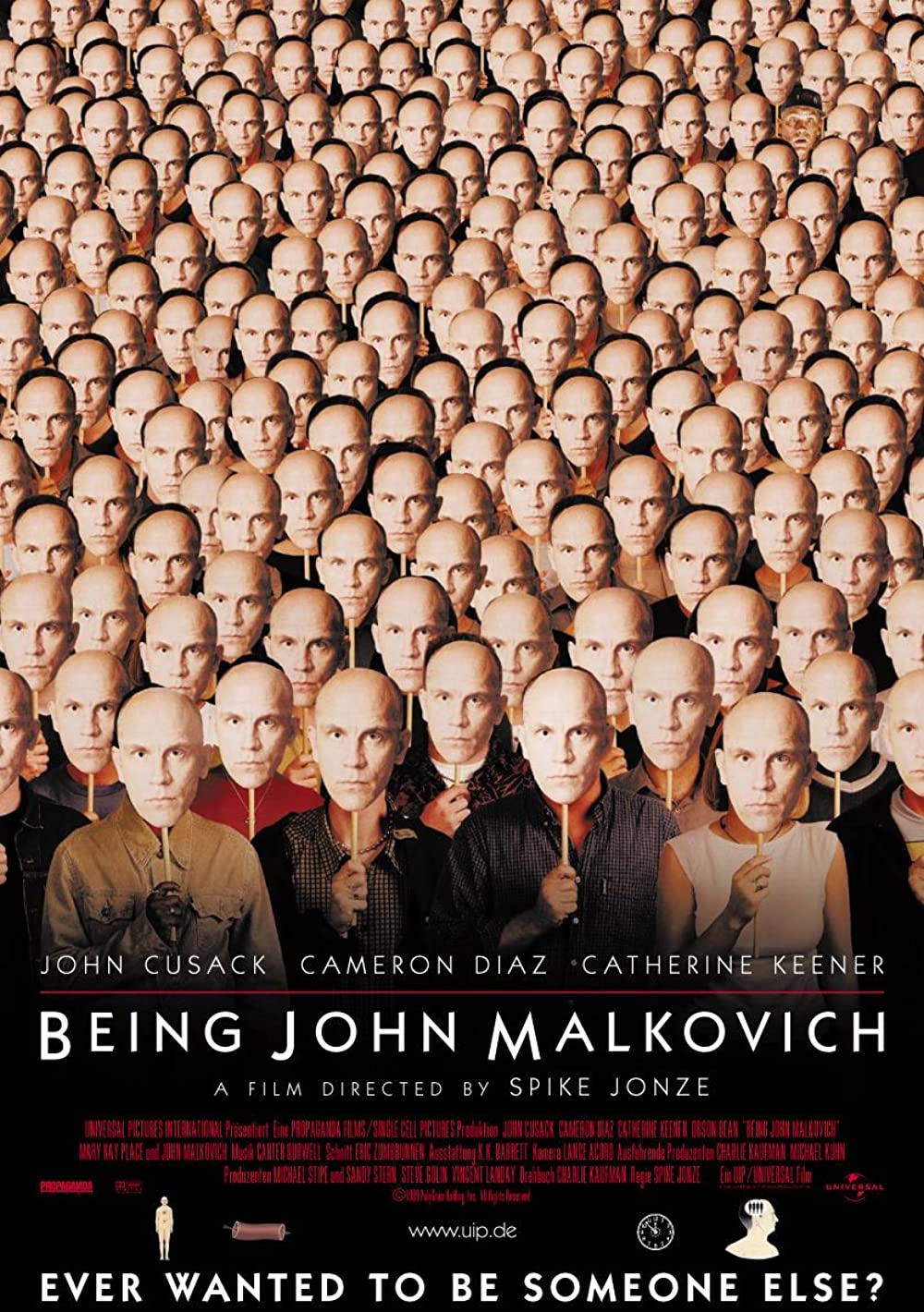
Caden Cotard (Philip Seymour Hoffman, Capote) is a theatre director who is obsessed with every detail of his work. With increasing illnesses and grower ever distant from his wife, Adela (Catherine Keener, Being John Malkovich), his life is starting to fall apart and he is becoming increasing aware and scared of his own death. After his wife moves to Berlin, with their daughter, Caden wins the MacArthur Fellowship grant and wants to create a piece that is full of truths inside a gigantic warehouse in Manhattan.
Hoffman is fantastic as the insecure aging theatre director. There’s a nervousness and vulnerability that his brings in each scene that really captures a man wrestling with his own insecurities while trying to create a masterpiece and at the same time wrestling with his own mortality. At times it feels like Caden is just waiting to die. Life passes by very quickly, he has a second child, but doesn’t remember their name. He’s not present and misses out.
At the beginning of the story, Caden is working on an adaptation of Arthur Miller’s Death of a Salesman, with the twist of casting young people in all the roles. The themes of Miller’s play are mimicked and reflected in Synecdoche, New York. There is a sense of never being able to achieve the dream and always chasing something. Caden never finishes his play always chasing the realism and truth he has been chasing, in a similar way that Willy Loman is chasing wealth in Salesman. Miller’s play also deals with a blend of reality and delusion with flashbacks that blend into the present, similarly Kaufman explores a dreamlike state full of imagery that feels a step away from reality.
There is a lot to unpack in this film. It’s something that you have to pay attention to and it rewards you for thinking a little bit about the world it creates. There’s a house that is constantly on fire, which Hazel buys despite worrying the fire will one day kill her. Kaufman said in an interview with the New Yorker that this was about the choices we make resonate for the rest of out lives. There’s an interesting use of scale throughout. The scale of Caden’s convoluted play grows beyond realism, with his set recreating much of New York, while his ex-wife’s paintings get smaller and smaller. You can bring your own meaning and analysis to the film and it really rewards you for engaging with the film in this way.
Even though the film is under two hours, it feels about seven. It’s an exhausting ordeal watching this and at points it does feel like hard work. There is a lot in the film, but when you get to the end and only two hours or so have passed it’s hard to grasp that so little time has gone by. It feels like a lifetime, which I think works for the film but probably not for everyone.
The film sums itself up at one point, with a character explaining that we spend most of our time before being born or dead, the bit in the middle we spend waiting for something to happen never really understanding how quick the moment it. It’s a poignant moment in an exhausting film. This film is a piece of art and is something that will either get better with each re-watch or collapse in on itself.
On a side note, I did spend a lot of this film with the lyrics to Limelight by Rush stuck in my head and I think it fits nicely. (I know it’s paraphrasing Shakespeare) All the worlds indeed a stage and we are merely players/Performers and portrayers/Each another’s audience outside the gilded cage.



 Ashley Manning