Asadora! – Manga Review

Asadora! is the latest manga from the legendary Naoki Urasawa, my favourite mangaka. It follows Asa, a 12 year old girl from a very large family who doesn’t feel noticed, to the point that she’s kidnapped and is convinced her family won’t even notice. She’s kidnapped by Haruo just as 1959 Isewan Typhoon hits, and they end up surviving the flooding because Asa isn’t home. Haruo isn’t a bad person, he’s just down on his luck after loosing jobs and not having a pilots licence, even though he’s a fantastic pilot and a ‘hero of the skies’ from WW2. While he’s robbing a house for food, Asa notices him, and he mistakes her for the doctor’s daughter and kidnaps her thinking it will lead to riches.

Like anything by Naoki Urasawa, Asadora! is a pure page-turner. I sat down to read one chapter, just to make a start, and then I read two volumes back to back. Urasawa is a master storyteller and Asadore lives up to his long line of excellent stories. It’s nowhere near as dark as something like his Monster series, but there’s still hints of the horrible things people are capable of. Asa is a more hopeful character and there is a great sense of positivity in the first two volumes, even with the dark moments mixed in.

For the most part the story in the first two volumes is set in 1959, before time jumps forward to around the Tokyo Olympics in 1964 late in the second volume, with Asa and Haruo trying to help others during the typhoon. It’s perfect historical fiction that had me hooked instantly. Both Asa and Haruo are excellent characters and completely likable, even if Haruo starts as a villain. There are a few side characters that are filled with personality as well. The historical setting is so great that you forget the book starts with a monster attacking Tokyo in 2020, until the final page of the first volume revisit that element of the story.

Asadora! is still ongoing and I can’t wait to read more. At the moment there are five volumes out in the UK. I’ve got the third one waiting to be read and will be picking up volume 4 and 5 pretty soon afterwards. It’s an amazing story with fantastic characters. Well worth reading.

Thanks for reading! If you liked my review please subscribe to never miss a post:

Posted in Book reviews | Tagged , , , , , , , , , , | Leave a comment

The Found Footage Phenomenon – Documentary Review

Directors: Sarah Appleton and Phillip Escott

Writers: Sarah Appleton and Phillip Escott

Features interviews with: Dean Alioto, Stefan Avlos, James Cullen Bressack, Patrick Brice, Aislinn Clarke, Steven DeGennaro, Ruggero Deodato, Michael Goi

Rating: ★★★

Found footage horror films are some of the scariest films ever made and have remained popular for decades, mainly because they have the ability to feel completely authentic in a way that most horror films simply can’t. Films like The Blair Witch Project and Paranormal Activity are held up as some of the best and scariest horror films in recent years. Sarah Appleton and Phillip Escott have created a documentary, The Found Footage Phenomenon, which takes a deep dive into the genre, it’s origins, why it’s remained so popular, and interviews with the people behind some of the classic films.

If you’re a big horror fan, then there’s not much in this documentary that will be new to you. It goes through the big hits in a pretty much chronological order, with some of the most watched found footage films, with a few hidden gems of the genre thrown in for good measure. What’s appealing to horror fans is the snippets of interviews with the people involved in the films, getting to know just a little bit more about some classics.

The most interesting parts is when the film goes into the history of the genre, and it’s predecessors in novels like Bram Stoker’s Dracula, and early films that feature elements of the genre such as Peeping Tom from 1960. It then spends some time in the 80s and 90s with some pre-Blair Witch films, such as the ever controversial Cannibal Holocaust. Thankfully it stays away from showing the worst parts of animal cruelty from that film.

Most of the documentary is focused on more recent films from the 2000s, with some lesser known titles getting some time to shine. Even the most hardcore horror fans are going to find out about some new films in this section. There’s also a good discussion about why the genre works so well for horror, even if a few points are repeated quite a few times.

Ultimately the biggest downfall is the documentaries length. It’s around a hundred minutes, which is longer than most films in the found footage genre, and it feels a lot longer. The last forty or so minutes feel really dragged out. Like there was too many interview sections that they didn’t want to cut down. It also ends on a real whimper.

The Found Footage Phenomenon is a decent documentary. If you’re a fan of the genre, you’re probably going to already know most things it’s discussing, but it’s still entertaining. At the same time if you’re not a fan, it’s not really going to win you over and make you want to seek out the films you’ve missed.

The Found Footage Phenomenon will be available on Shudder from 19th May

Thanks for reading! If you liked my review, please subscribe to never miss a post:
Posted in Uncategorized | Tagged , , , , , , , , , , | Leave a comment

Update

Hi everyone, it’s been a while since I wrote a simple update post. I originally had a documentary I was going to review for today, but since finishing work my internet has been very spotty and I haven’t been able to watch it all, so I thought I would take the time to write an update post and review the documentary tomorrow.

I can’t remember when the last update was, but it’s been a little while. This year is absolutely flying by, I still think it’s like January, but somehow it’s almost June. Fiction writing has taken a backseat to writing reviews, and it is something I want to get back to soon. I keep trying to get ahead on review, but I’ve also been addicted to playing Yakuza: Like a Dragon, which takes up too much of my time. I honestly think it’s the best game in the Yakuza/Judgement series. Absolutely loving it. Apart from that I’ve also been binge watching the Trash Taste podcast on YouTube.

With the films I’ve been watching, the only one I haven’t reviewed is Metropolis, which I did enjoy and really liked the aesthetic to it. I can see completely why it’s held up as a masterpiece, it’s legacy, and influence it’s had over sci-fi. Brigitte Helm is absolutely phenomenal in it. Her performance literally makes the film. I watched the 2010 restoration which is the most complete version of the film available. I do think it’s too long, and I’m not surprised it was cut down when it first came out, but it’s still good. I will watch it again and it’s a new addition to my list of films that I want to watch in a cinema at some point.

A few weeks ago, around the start of April I was ill and that stopped me reading almost completely. I have two unfinished books next to my bed and I need to get back to them. I just found it so hard to focus on things I was reading and haven’t picked up a book since. I have tomorrow off and will be forcing myself to read something for a little bit.

Well that sums up what I’ve been up to recently. Plenty of things to come. For now, thanks for reading and until next time,

Ashley

Posted in Updates | Tagged , , , , , , , , , , | Leave a comment

The Polka King – Film Review

Director: Maya Forbes

Writers: Maya Forbes and Wallace Wolodarsky

Starring:  Jack Black, Jenny Slate, Jason Schwartzman, and Jack Weaver

Rating: ★★★1/2

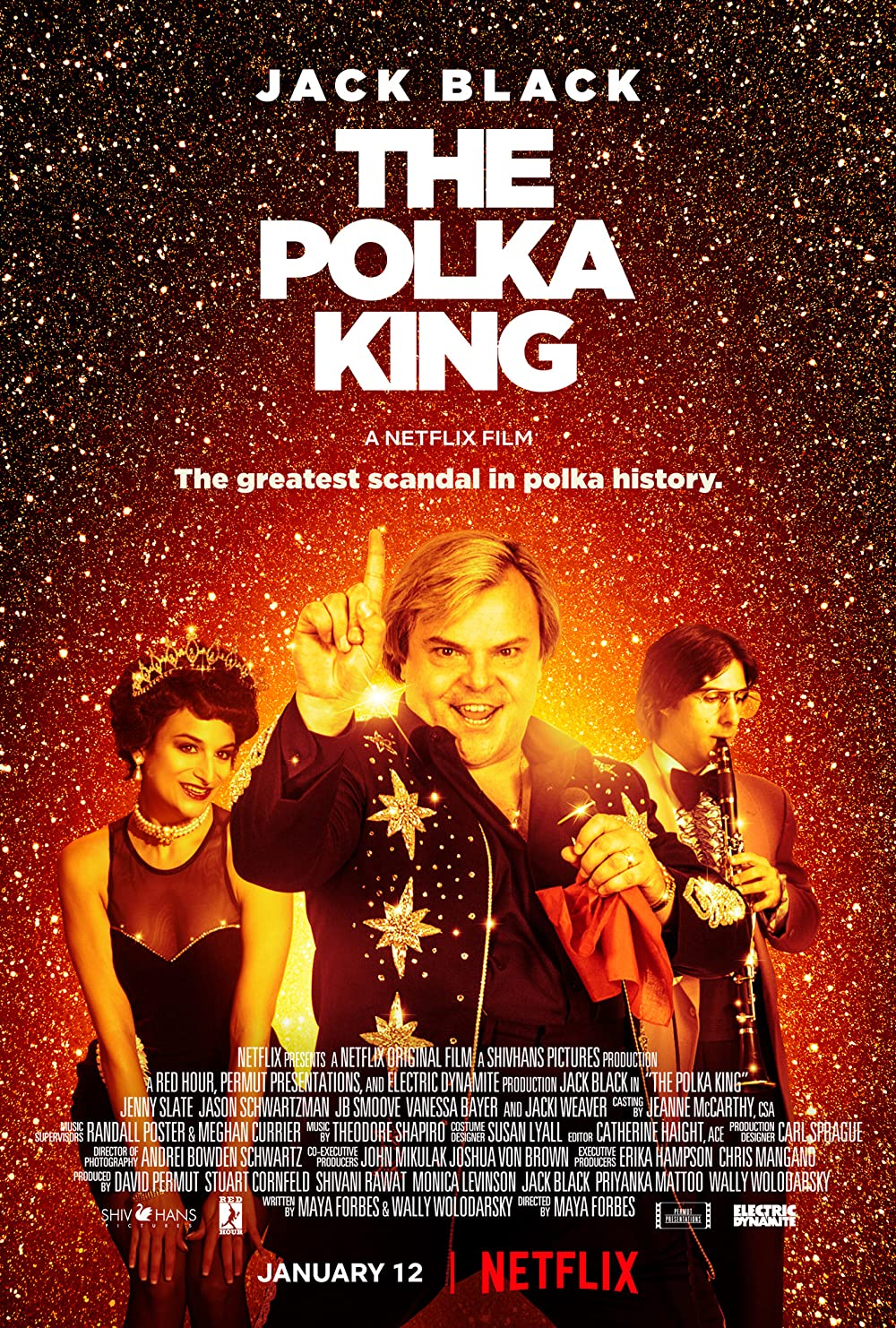
The Polka King is a comedy based on a true story. Jack Black stars as the so-called polka king, Jan Lewan, a larger-than-life character who is not only a polka singer but also manager to operate a Ponzi scheme across several states, taking over $4.5 million from people. It’s an incredible story, that is genuinely hard to believe, and yet somehow the most outlandish parts are true.

Jan spends most of his time on the road playing polka music with his band, and then when back at home in Pennsylvania he runs a souvenir shop. He’s always dreamed of making it big in America and after learning that some of his bands are thinking of quitting due to low pay, he takes on investors to help achieve success and pay his band.

Over the course of the film things escalate and he takes on more and more investors, promising big returns without making enough money to pay them back. Polka music isn’t his only venture, with money in all sorts of businesses, including travel where he promises a trip around Europe and a private meeting with the pope. Somehow that’s true and Jan managed to get several tour groups to meet the pope, although how he did it is up to debate, the film doesn’t really give an answer for that, but it does show pictures of them together as the credits start to roll.

The film goes through around fifteen years of Jan’s life before he’s inevitably caught for what he’s doing. It shows various points of Jan’s career from humble beginnings to success, and even a Grammy nomination (another part that’s true). It’s one of those films that after its finished you do some research and are shocked to find there’s more truth than you’d expect.

The cast are all fantastic. Jack Black is great in the film, perfectly cast as the outlandish character and bringing his usual charm. Jason Schwartzman, one of the members of the band who’s unaware of the scheme, is also great and works really well with Black. Jenny Slate, who plays Jan’s wife Marla (based on Jan’s real wife Rhonda), is exceptional, playing someone completely different to Jan but is completely relatable and more grounded.

Funnily enough the film doesn’t show much sympathy towards the victims of the scheme, painting them as greedy people who should have known that the returns were too good to be true. A view that’s shared by Jan’s real ex-wife who said in a documentary that ‘no one put a gun to their head’. Instead, the film is a feel-good comedy, showing Jan as a charismatic and likable person who just got in over his head.

Overall, t’s funny and entertaining, Jack Black gives a really strong performance, and the story is interesting. It’s not a hard-hitting film about the Ponzi scheme but a fun comedy that has something for everyone.

Thanks for reading! If you liked my review, please subscribe to never miss a post:
Posted in film reviews | Tagged , , , , , , , , , , | Leave a comment

The Amusement Park – Film Review

Director: George A. Romero

Writer: Wally Cook

Starring: Lincoln Maazel, Harry Albacker, Phyllis Casterwiler, Pete Chovan, Sally Erwin,

Shortly after finishing Season of the Witch, director George A. Romero was approached by the Lutheran Service Society of Western Pennsylvania to make an educational film about ageism and how the elderly are neglected by the youth of society. The film was Romero’s only work-for-hire film, and one of only three that Romero directed but didn’t write, with the screenplay instead being written by Wally Cook. The idea was to show the film at community centres but was ultimately shelved due to the more experimental and unsettling tone of the film.

For over forty years the film was considered lost, until a friend of Romero gave him and his wife a copy a few weeks before his death in 2017. Even Romero’s wife had never heard of it before, but was shocked when she saw it, not only because he had never mentioned it before, but also because of how relevant it feels today and how edgy it feels. The film starts with Lincoln Maazel, who would go on to work with Romero again in Martin, out of character telling the audience the purpose of the film. It is designed to make you feel the issues that the elderly goes through daily without just regurgitating facts and stats that we’ve all heard time and time again.

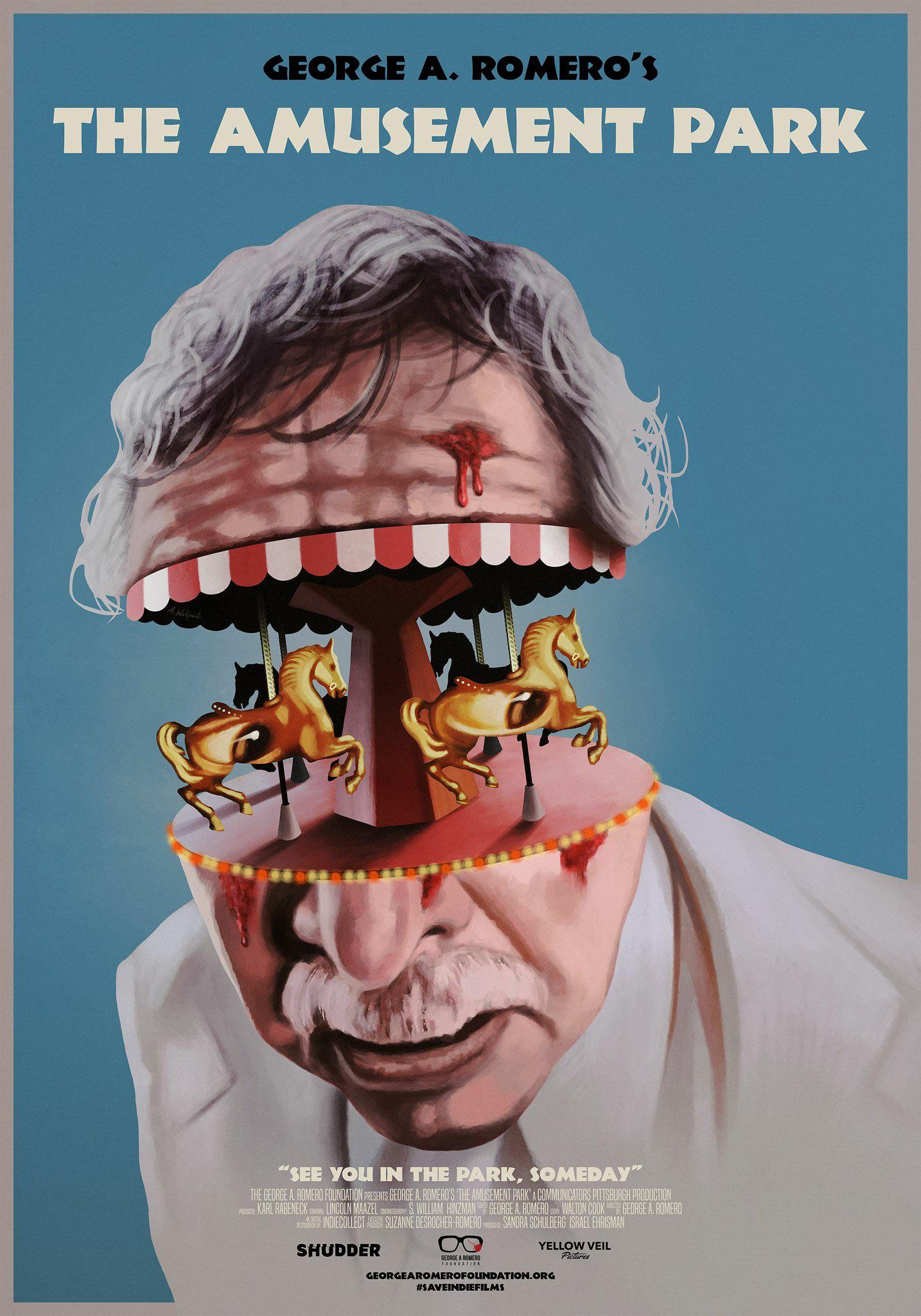
After the short introduction Maazel is in a white sterile room with a bloody forehead and looks broken, he’s then approached by a more optimistic version of himself, who asks if he’s going to go outside. Not heading the advice of the bloody version of himself to not go out there, Maazel goes out into the amusement park with a hopeful feeling, but instead goes through a series of events that lead him to become the bloody version of himself at the start, and the cycle starts again.

It’s not really a narrative film, even though there’s a loose plot. Instead, it’s a series of abstract and dreamlike events that drive the main character to lose all hope. The film completes what it sets out to do by creating the feeling of isolation and separation from the rest of the people in the park. As younger people seemingly have a good day out, Maazel aimlessly wanders about, being taken advantage of by pickpockets or being forced into a room for the elderly as if he was a child. It’s a deeply strange and unsettling experience that does get under your skin.

This isn’t something you would watch as a good horror film, but it is interesting to see a piece of Romero’s career that has been all but forgotten. It’s a curiosity piece that still works almost fifty years later and is worth watching for that alone.

Thanks for reading! If you liked my review, please subscribe to never miss a post:

Posted in film reviews | Tagged , , , , , , , , , , | Leave a comment